
Blocked Gutters and Damp Walls: Gutter Cleaning for Reading Homes
A damp patch creeping across an upstairs ceiling rarely starts with a dramatic leak. More often, it starts quietly, with a gutter that's been slowly filling with moss and leaves for a season or two without anyone noticing. Gutter cleaning in Reading is one of the most overlooked parts of home maintenance, yet it's directly connected to some of the damp problems homeowners eventually pay a lot more to fix. This guide explains exactly how a blocked gutter leads to a damp wall, and what keeps that chain of events from starting in the first place.
The quick answer: blocked gutters force rainwater to overflow down the outside wall instead of into the downpipe, and on older solid brick homes without a cavity, that repeated soaking works its way through to the inside, showing up as damp patches, peeling paint or mould well before anyone thinks to check the guttering.
1. How a blocked gutter actually causes a damp wall
Gutters are designed to carry water away from the building, not to hold it. Once moss, leaves and grit build up enough to block the flow, rain has nowhere to go but over the front lip of the gutter, running straight down the brickwork below rather than through the downpipe and away from the foundations.
That overflow doesn't need to be dramatic to cause damage. A gutter that overflows during every heavy downpour is soaking the same stretch of wall over and over, and brick and mortar can only shed so much repeated water before some of it starts working its way inward.
2. Why Reading's Victorian solid brick walls are especially vulnerable
A lot of Reading's housing, particularly the Victorian terraces around Newtown and East Reading, was built with solid brick walls rather than the cavity construction used in most homes built after the 1930s. Solid brick has no air gap to stop moisture travelling through to the inner surface, so water that gets into the brick from an overflowing gutter has a much more direct route to an internal wall than it would on a modern cavity-wall house.
Our guide on why Reading's Victorian terraces grow moss so fast goes into more detail on how these older roofs and walls interact with the local climate, which is worth reading alongside this if you own a period property.
3. The warning signs an overflowing gutter is already causing damage
Overflowing gutters usually announce themselves before any damp shows up inside, if you know what to look for. A visible sheet or stream of water running down the outside wall during rain, rather than falling cleanly from the downpipe, is the clearest sign. Green streaking or a damp, darker patch of brickwork below a gutter joint is another.
Indoors, a damp patch on an upstairs ceiling or the top of a wall, especially one that seems to appear or worsen after heavy rain, often traces straight back to a gutter that's been overflowing at that exact spot for some time.
4. What actually blocks a gutter in Reading
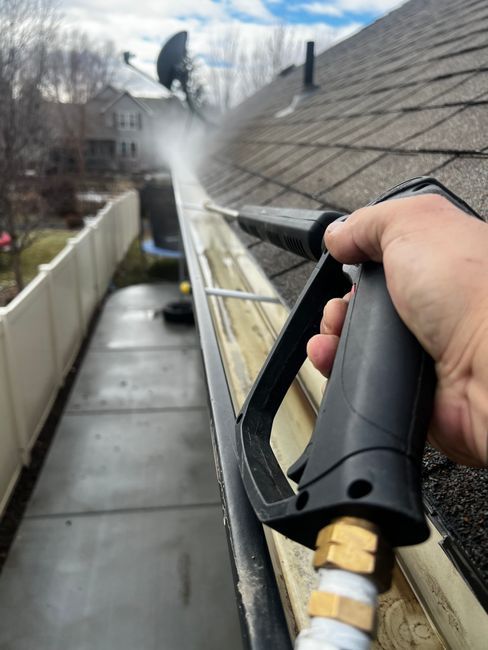
Moss and grit washed down from the roof are a major contributor, especially on the slate and clay tile common across Reading's older terraces, where a rough tile surface sheds debris more readily than smooth modern tile. Once that debris settles in the gutter, it creates a rough base that catches even more material over time.
Leaves from mature street trees add to the problem every autumn, particularly in leafier suburbs like Caversham, Tilehurst and Woodley. Left through winter, that leaf litter compacts into a dense, waterlogged mat that's far harder to clear than the loose leaves that first fell.
5. Cast iron and older guttering need a slightly different eye
Plenty of Reading's period properties still have original cast iron guttering, sometimes decades old, alongside newer UPVC sections added during past repairs. Cast iron is heavier and more durable in some ways, but it can rust, crack or develop hairline splits at the joints over time, which is a different failure mode to the sagging or cracked brackets more common on UPVC.
A gutter clean on an older property is a reasonable moment to also check the condition of the guttering itself, since debris can hide early rust or a cracked section that would otherwise go unnoticed until it fails outright.
6. The damage that builds up if it's left unchecked
Beyond damp patches and peeling paint, water that's repeatedly forced down a wall can eventually reach timber, whether that's a wooden window frame, a fascia board, or roof timbers at the eaves. Persistent damp in timber creates the conditions for rot, and rot in a structural timber is a considerably bigger repair than a gutter clear would ever have been.
Mould is the other common consequence, particularly in a poorly ventilated upstairs room where damp has been quietly building behind plaster for a while before anyone notices the smell or the staining.
7. How often gutters actually need cleaning in Reading's climate
Most homes in and around Reading need a gutter clean at least twice a year, once after the main autumn leaf fall and again in spring to clear whatever collected over winter. Properties under mature trees, or on shaded, tightly packed terraced streets, sometimes need a mid-year check as well.
Reading's pattern of frequent light rain rather than occasional heavy downpours means gutters rarely get a hard, self-clearing flush the way they might in a wetter part of the country, so debris tends to accumulate steadily rather than getting washed through on its own.
8. DIY gutter cleaning versus calling in help
A single-storey gutter that's easily reached from a stable ladder on flat ground is a reasonable DIY job for many homeowners. A two-storey terrace with a narrow street frontage, or a gutter that backs onto a neighbour's garden, is a different proposition entirely, and the same fall risks that apply to DIY roof work apply here too.
Our guide on DIY moss removal versus a professional clean covers a lot of the same access and safety considerations that apply directly to gutter work as well.
9. Why gutter cleaning and roof cleaning work well together
Moss and grit that come off during a roof clean generally end up in the gutter line, so booking both jobs in the same visit is usually more efficient than treating them as separate appointments. It also means a freshly cleaned roof isn't immediately undone by a gutter still full of the debris that just washed down.
Our guide on seasonal roof and gutter prep for Berkshire homes lays out a full year-round schedule if you'd rather plan both jobs together in advance.
- Water overflowing the front lip of a gutter during rain, rather than draining through the downpipe
- Green streaking or a darker, damp patch of brickwork below a gutter joint or section
- A damp patch on an upstairs ceiling or wall that worsens after heavy rain
- Sagging or visibly pulled-away gutter brackets along the fascia board
- Leaf litter or moss visible spilling over the gutter edge from the ground
Frequently Asked Questions
How do I know if my gutters are causing damp inside my house?
Look for damp patches on upstairs ceilings or walls that appear or worsen after heavy rain, especially near an outside wall below a gutter run. Outside, water overflowing the gutter lip during rain is a strong indicator.
Are Victorian houses in Reading more at risk from blocked gutters?
Yes, generally. Solid brick walls without a cavity give water a more direct path from the outside surface to an internal wall than modern cavity construction, so overflow reaches the inside faster on older properties.
How much does gutter cleaning cost in Reading?
It depends mainly on the property's size, height and access, and whether it's combined with a roof clean in the same visit, which tends to work out more cost-effective than booking the two jobs separately.
How often should gutters be cleaned?
At least twice a year for most Reading homes, once after autumn leaf fall and again in spring. Properties near mature trees may need an additional check partway through the year.
Can I clean my own gutters?
A single-storey, easily reached gutter is reasonable to clean yourself with the right care. A two-storey terrace with limited access is safer left to someone with proper equipment, given the fall risk involved.
Does cast iron guttering need different care to UPVC?
It benefits from an eye kept on rust and hairline cracks at the joints, which fail differently to the sagging brackets more common on UPVC. A gutter clean is a good moment to check both.
Worried a blocked gutter might already be causing damp?
Ben's Roof Cleaning has over 15 years of experience clearing gutters and preventing damp problems on homes across Reading and Berkshire. Get in touch or call 0118 207 9318
for a free, no-obligation quote.
A clear gutter is one of the cheapest ways to protect a Reading home
The link between a blocked gutter and a damp wall is direct, mechanical and entirely preventable, which makes gutter cleaning one of the better-value jobs a homeowner can book. Catching the problem at the gutter, rather than waiting for a damp patch to show up on a ceiling months later, is what actually keeps a Reading home dry through the wettest parts of the year.