
Seasonal Roof and Gutter Prep for Berkshire Homes
Most homeowners think about their roof and gutters twice a year: when a downpour finds a way inside, and when someone mentions moss on the drive. Roof cleaning in Reading and the wider Berkshire area actually works best on a seasonal rhythm rather than a reactive one, because the Thames Valley's weather pattern puts different pressure on a roof at different points in the year. This guide walks through what each season demands, from autumn leaf fall to the best window for a proper clean, so maintenance stops being a surprise and starts being a routine.
The quick answer: autumn is for clearing leaves before they rot in the gutter, winter is for checking for storm and frost damage, spring is for assessing moss growth, and late spring through summer is the best window to book a roof clean or gutter clearance across Reading and Berkshire.
1. Why Reading and Berkshire homes need a seasonal approach
Reading sits where the Thames meets the Kennet, in a part of the country that gets frequent light rain rather than occasional heavy downpours. That pattern keeps roofs and gutters damp for long stretches, which is exactly the condition moss, algae and blocked downpipes thrive on. A one-off clean, done whenever someone finally notices the problem, tends to let small issues build into bigger ones between visits.
A seasonal rhythm instead catches problems while they're still minor. Clearing autumn leaves before winter rain compacts them into a stubborn dam is a very different job from digging out a season's worth of rotted debris in spring.
It's also worth saying that the type of home matters here. Victorian terraces around Newtown and East Reading, with their solid brick walls and older slate or clay tile, tend to show water damage indoors faster than newer builds around Woodley or Lower Earley, where cavity walls and modern guttering are more forgiving of a missed season. Neither type of home is exempt from seasonal care, but older properties tend to punish neglect more quickly.
2. Autumn: the leaf problem Berkshire's mature trees create
Reading and its surrounding suburbs, Caversham, Tilehurst, Woodley and Earley among them, have plenty of mature street trees and garden planting, which is lovely for most of the year and a genuine gutter hazard every autumn. Leaves that settle in a gutter don't just sit there. They soak up rain, compact down, and start to rot, creating a dense mat that water can't get through.
Clearing gutters once the bulk of the leaf fall is down, typically once October's worst has passed, stops that mat forming in the first place. Leave it until spring and you're often dealing with a solid, waterlogged blockage rather than loose leaves you can simply lift out.
3. Winter: rain, frost and the freeze-thaw problem
Winter in Berkshire brings the heaviest sustained rainfall of the year, and any gutter still holding autumn debris is now working against a lot more water than it was built for. Overflow at this point doesn't just make a mess. It runs down brickwork, and on older solid-wall Victorian properties without a cavity, that repeated soaking is often where the first internal damp patches start.
Frost adds a second problem. Water trapped in a blocked gutter or sitting in a crack in an older tile can freeze, expand, and force damage that wasn't there in autumn. A quick visual check after a cold snap, looking for cracked tiles, sagging gutter sections or ice damming at the eaves, catches problems before they turn into a leak.
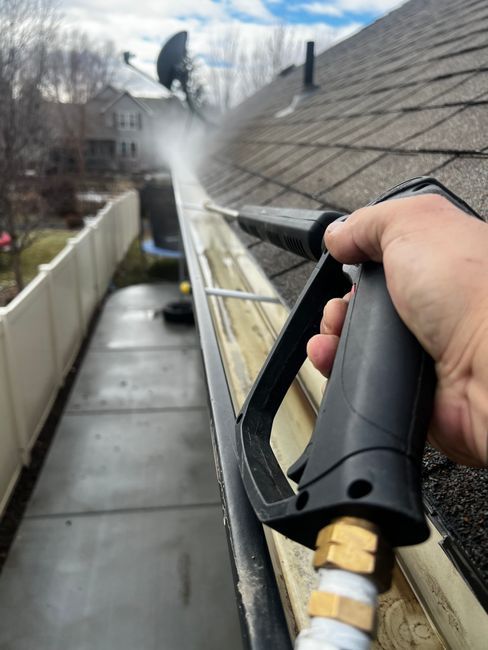
4. Spring: assessing what winter left behind
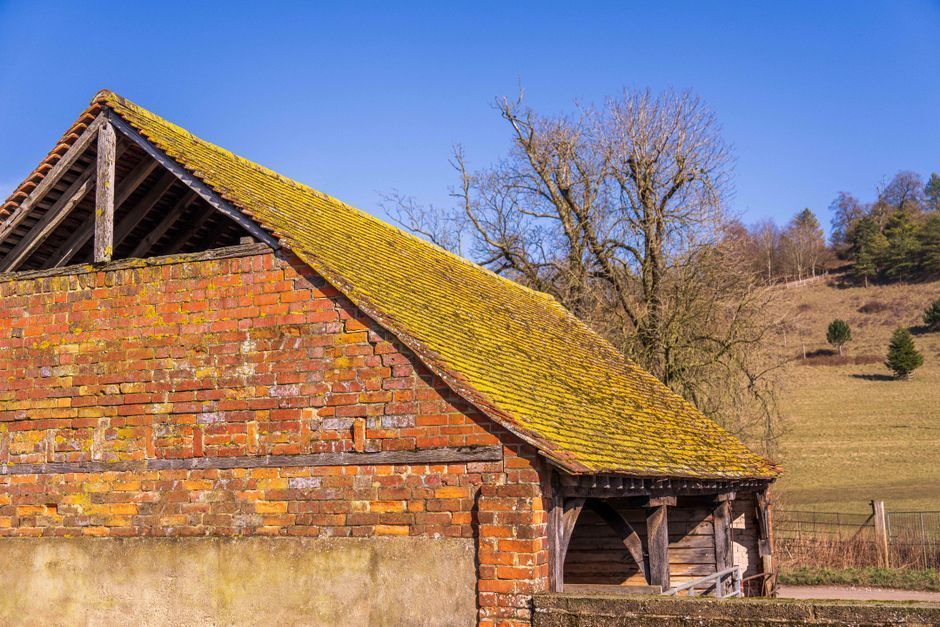
Spring is when moss growth from a damp winter becomes most visible, as the green cushions that built up through the darker months start to stand out against drier surrounding tiles. It's also a sensible time to check for anything winter storms may have loosened, slipped ridge tiles, damaged flashing, or a gutter bracket pulled away from the fascia board.
A spring check doesn't need to be a full inspection from a ladder. Looking up from the garden or the street after a few dry days will usually show whether moss has spread since last year, or whether something looks visibly out of place.
5. Late spring and summer: the best window for a proper clean
Drier, more settled weather makes late spring and summer the most practical window for roof cleaning across Reading and Berkshire. Treatments used in a soft wash need a reasonable dry spell to work properly, and access is generally easier and safer without the short daylight hours and slippery conditions winter brings.
Booking a clean in this window also means the roof heads into the following autumn and winter already clear, rather than carrying a season's worth of buildup into the wettest months of the year.
6. Gutter cleaning deserves its own seasonal timing
Gutters generally need attention at least twice a year in Berkshire's climate: once after the main autumn leaf fall, and again in spring to clear whatever built up over winter. Properties near larger trees, or on shaded, tightly packed terraced streets, may need a mid-year check as well.
Our guide on blocked gutters and damp walls goes into more detail on how a neglected gutter turns into an interior damp problem, which is worth understanding if you're deciding how often to book.
7. Signs you've let a season slip by without attention
A roof or gutter that's been missed for a season or two usually gives some warning signs before anything serious happens. Water spilling over the side of a gutter during rain rather than running through the downpipe is one of the clearest. Moss visibly thickening on ridge tiles, or damp patches appearing on an internal ceiling below a roof valley, are others.
None of these mean a full replacement is needed. They usually just mean the seasonal rhythm has slipped, and it's a good time to get back on schedule before a bigger repair becomes necessary.
8. Building a year-round maintenance rhythm that actually sticks
The easiest way to keep on top of a Berkshire roof is to attach the jobs to the calendar rather than to memory. An autumn gutter clear once the leaves are mostly down, a spring check for winter damage and early moss regrowth, and a roof clean booked for late spring or summer covers the year without anything needing last-minute attention.
Pairing gutter cleaning with a roof clean in the same visit, rather than booking them separately, also tends to be more efficient, since moss and grit dislodged during a roof clean usually ends up in the gutter line anyway.
Writing the dates into a diary or a phone calendar, rather than relying on noticing a problem, is the simplest way to make this stick. Most homeowners who fall behind on roof and gutter care aren't being careless, they've just lost track of when the last clean actually happened.
- Autumn , clear leaves before they compact and rot in the gutter
- Winter , check for frost damage, slipped tiles and ice damming after cold snaps
- Spring , assess moss growth and any storm damage from the months before
- Late spring and summer , the most practical window to book a full roof clean
Frequently Asked Questions
What's the best time of year for roof cleaning in Reading?
Late spring through summer generally gives the driest, most settled conditions, which suits soft washing treatments and makes access safer and easier for a cleaning team.
How often should gutters be cleaned in Berkshire?
At least twice a year for most homes, once after autumn leaf fall and again in spring. Properties near large trees or on shaded terraced streets sometimes need a mid-year check too.
Does frost actually damage roof tiles?
Yes. Water trapped in a crack or under a moss cushion can freeze and expand, which can crack or lift a tile that was otherwise sound. Older slate and clay are more vulnerable to this than modern concrete tile.
Is it worth cleaning a roof in winter?
It's not ideal. Cold, wet conditions make access harder and give soft wash treatments less chance to work properly. Winter is better used for spotting damage than for scheduling a full clean.
Does seasonal maintenance cost more than a one-off clean?
Not usually, and it often costs less over time, since catching moss and debris early avoids the bigger job that comes from years of buildup. Our guide on what affects the cost of roof cleaning
explains why a neglected roof often costs more to bring back.
Can I just wait until I see a leak before doing anything?
You can, but by the time a leak shows up inside, the gutter or roof issue causing it has usually been building for a while. Regular seasonal checks catch the same problem much earlier and much more cheaply.
Do older Victorian homes in Reading need more frequent maintenance than newer houses?
Generally, yes. Solid brick walls without a cavity show damp faster than modern cavity wall construction, and older slate or clay tile is more sensitive to frost and pressure than concrete tile, so a consistent seasonal routine matters more on a period property.
Ready to get your roof and gutters on a proper seasonal schedule?
Ben's Roof Cleaning has over 15 years of experience keeping roofs and gutters in good condition across Reading and Berkshire, all year round. Get in touch or call 0118 207 9318
for a free, no-obligation quote.
A roof looked after every season needs far less looking after in total
Treating roof and gutter care as a year-round rhythm, rather than a single annual scramble, is what actually keeps a Berkshire home dry through the wettest months. Small, well-timed jobs done in autumn, winter, spring and summer add up to far less work, and far less risk, than waiting for a problem to announce itself from inside the house.