DIY Moss Removal vs a Professional Clean in Reading: What Homeowners Should Know
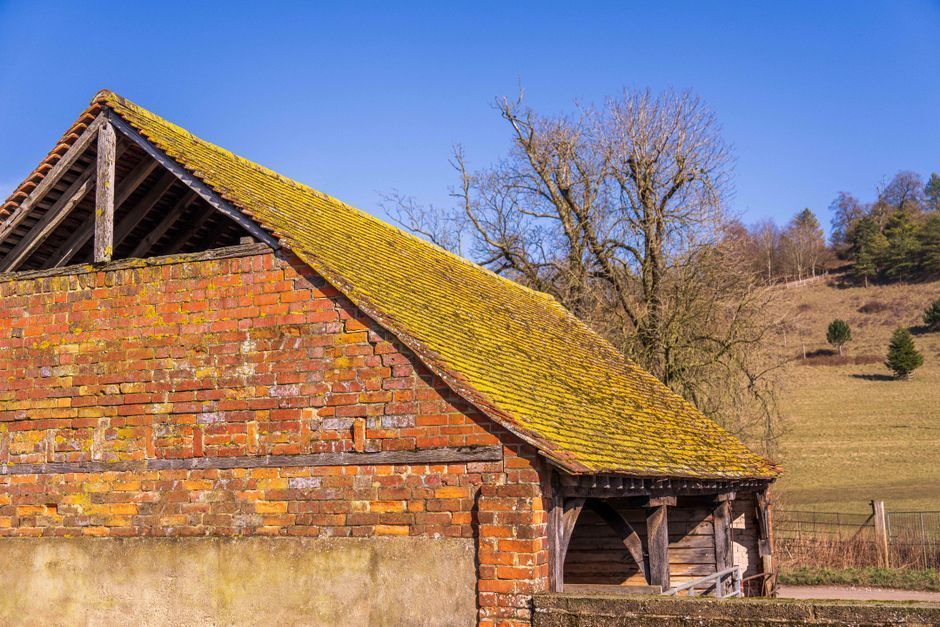
It's a Saturday morning, you've spotted moss creeping across the roof, and a ladder is sitting in the shed. Before you climb up, it's worth thinking through what moss removal in Reading actually involves, because what looks like a simple scrub can turn into a damaged roof, a hospital visit, or both. This guide sets out the real risks of doing it yourself, where DIY genuinely is fine, and when it makes far more sense to call in a professional.
The quick answer: DIY moss removal can work for small, easily reached, ground-level areas, but for pitched roofs, especially older slate and clay common across Reading, a professional soft wash is safer, more effective, and usually better value once you account for time, equipment and risk.
1. Why DIY looks tempting in the first place
Moss removal looks simple from the ground. Buy a pressure washer or a stiff broom, climb up, scrub the green off, done. For a garage roof or a low flat extension, that instinct isn't unreasonable. The trouble starts when the same logic gets applied to a full two-storey pitched roof.
Cost is usually the other draw. A pressure washer rental or a bottle of moss killer from a DIY shop looks far cheaper than a callout. What that comparison leaves out is everything that can go wrong once you're actually up there.
2. The access risk nobody budgets for
Falls from height are one of the most common causes of serious injury in home DIY, and a domestic ladder against a pitched roof is not designed for the kind of sustained work moss removal requires. You're not popping up to clear a gutter for five minutes. You're balancing, scrubbing, and moving your weight across a wet, sloped surface for an hour or more.
Reading's Victorian terraces make this worse in a specific way. Roofs are often steep, tightly packed between neighbouring properties, and reached only from a narrow street frontage or a small rear garden. There's frequently nowhere safe to position a ladder that gives proper access to the whole roof.
3. Wire brushes and pressure washers damage more than they clean
Scrubbing moss off with a wire brush might shift the green, but it also scratches and roughens the tile surface underneath. That rougher surface actually holds onto dirt and spores more easily next time round, so the moss often comes back faster after an aggressive scrub than it would after a proper treatment.
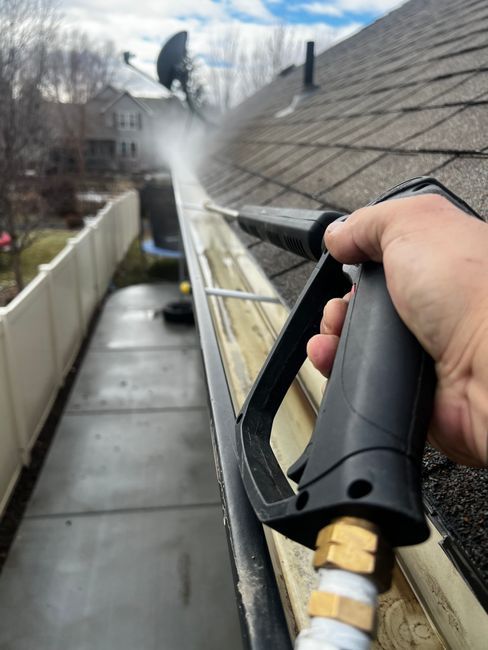
Pressure washers are worse on older tile. High-pressure water can strip the thin weathered layer off clay and concrete tiles, force water in under the tile edges rather than off the surface, and dislodge tiles that are already loosened by age or existing moss growth. On slate roofs, a slipped or cracked tile from pressure washing can mean a genuine repair bill, not just a missed patch of moss.
4. Chemical products bring their own risks
Bleach and generic patio cleaner are commonly reached for as a cheap moss killer, but neither is designed for roof tile. Runoff carries straight into gutters, downpipes and often into garden beds, ponds or water butts below, which can damage plants and isn't something a lot of homeowners think through before they start.
Some off-the-shelf products can also corrode metal guttering and flashing over repeated use. Professional treatments are formulated specifically for roof surfaces and are applied at controlled concentrations, which is a meaningful difference from whatever's under the kitchen sink.
5. What a professional soft wash actually involves
Soft washing uses low water pressure paired with a biodegradable treatment that kills moss, algae and lichen at the root rather than just knocking the visible growth off the surface. Because it doesn't rely on force, it's far gentler on older slate and clay, and it tends to keep a roof clear for longer than a manual scrub does.
A professional job also usually includes checking the roof for loose or damaged tiles before starting, clearing gutters of the debris that washes down during the clean, and taking basic precautions to protect plants and surfaces below. That's a lot of moving parts to manage safely from a domestic ladder.
6. Reading's terraces add their own complications
A lot of Reading's housing stock, particularly around Newtown, East Reading and parts of Caversham, is mid-terrace, meaning roofs are only accessible from the front or back, not from the side. Getting proper access sometimes means working from a neighbour's garden with permission, or using equipment that reaches safely without needing to stand directly on fragile old tiles.
Conservation area status in parts of Reading doesn't stop you cleaning your roof yourself, but it's still worth knowing that damage caused by an amateur clean, a cracked slate or a dislodged ridge tile, can be more disruptive and costly to put right on a period property than on a modern one.
7. Weighing up the real cost, not just the sticker price
A DIY attempt might look like it saves money on paper, but factor in the cost of hired equipment, product, your own time, and the risk of a fall or a damaged tile, and the comparison shifts. Our guide on what affects the cost of roof cleaning in Reading breaks down what professional pricing actually depends on, which makes the comparison easier to judge fairly.
It's also worth remembering that a botched DIY clean often just delays the professional visit rather than replacing it, and by then there may be tile damage to repair on top of the original moss problem.
8. When DIY genuinely is fine
Not every job needs a professional. A flat, easily reached garage roof, a low single-storey extension, or a small area you can safely clean from ground level with a long-handled soft brush and a gentle rinse is reasonable to tackle yourself. The line is really about height, pitch and access, not the presence of moss itself.
If you can do the job without a ladder, without walking on the tiles, and without needing to lean out over an edge, DIY moss removal for that specific area is low-risk. The moment a pitched, two-storey roof is involved, the calculation changes.
9. Choosing a professional if you decide against DIY
Look for a company that explains its method rather than just quoting a price, uses soft washing rather than high-pressure blasting on older tile, and is upfront about how it protects gutters, downpipes and plants during the work. A provider who's happy to answer questions about their process is usually a safer bet than one who just wants to get a date in the diary.
- A flat, ground-level or easily reached area is reasonable to clean yourself with a soft brush and gentle rinse
- A steep or two-storey pitched roof should be left to someone with the right access equipment and training
- Wire brushes and pressure washers tend to damage older slate and clay rather than protect it
- Household bleach or patio cleaner can harm plants, gutters and metal fittings if it runs off untreated
- A soft wash treatment clears moss at the root and generally lasts longer than a manual scrub
Frequently Asked Questions
Is it safe to remove moss from my own roof?
It depends entirely on the roof. A flat, low, easily reached surface is generally fine to clean yourself. A steep or two-storey pitched roof carries real fall risk and is better left to someone with proper access equipment.
Will a pressure washer damage my roof tiles?
It can, especially on older slate and clay. High-pressure water can strip protective weathering, force water under tiles, and dislodge tiles already loosened by moss or age.
Can I use bleach to kill moss on my roof?
You can, but the runoff isn't kind to plants, ponds or water butts below, and repeated use can affect metal guttering and flashing. A treatment designed for roof surfaces avoids that problem.
How much does professional moss removal cost compared to DIY?
Professional pricing reflects roof size, access and moss level, and often works out comparable to DIY once you factor in equipment hire, your own time and the risk of damage. Our guide on what affects the cost of roof cleaning
covers this in more detail.
Does moss removal need to happen every year?
Not usually. A soft wash every couple of years is enough for most Reading roofs, though shaded, north-facing slopes may need more frequent attention than sunnier ones.
Why does moss keep coming back after I scrub it off?
Scrubbing often leaves spores and roughened tile surface behind, which gives new growth an easier foothold. Treating the moss at the root, rather than just removing what's visible, is what actually slows regrowth.
Not sure whether your roof is a DIY job or not?
Ben's Roof Cleaning has over 15 years of experience safely removing moss from roofs across Reading and Berkshire, using soft washing methods suited to period and modern tile alike. Get in touch or call 0118 207 9318
for a free, no-obligation quote.
Height and pitch, not stubbornness, should decide who does the job
DIY moss removal has its place on a low, flat, easily reached surface, but a pitched roof two storeys up is a different proposition entirely. Weighing the real cost of equipment, time and risk against a professional soft wash usually makes the decision more straightforward than it first appears, and it's the difference between a roof that's actually clean and one that just looks that way from the pavement.